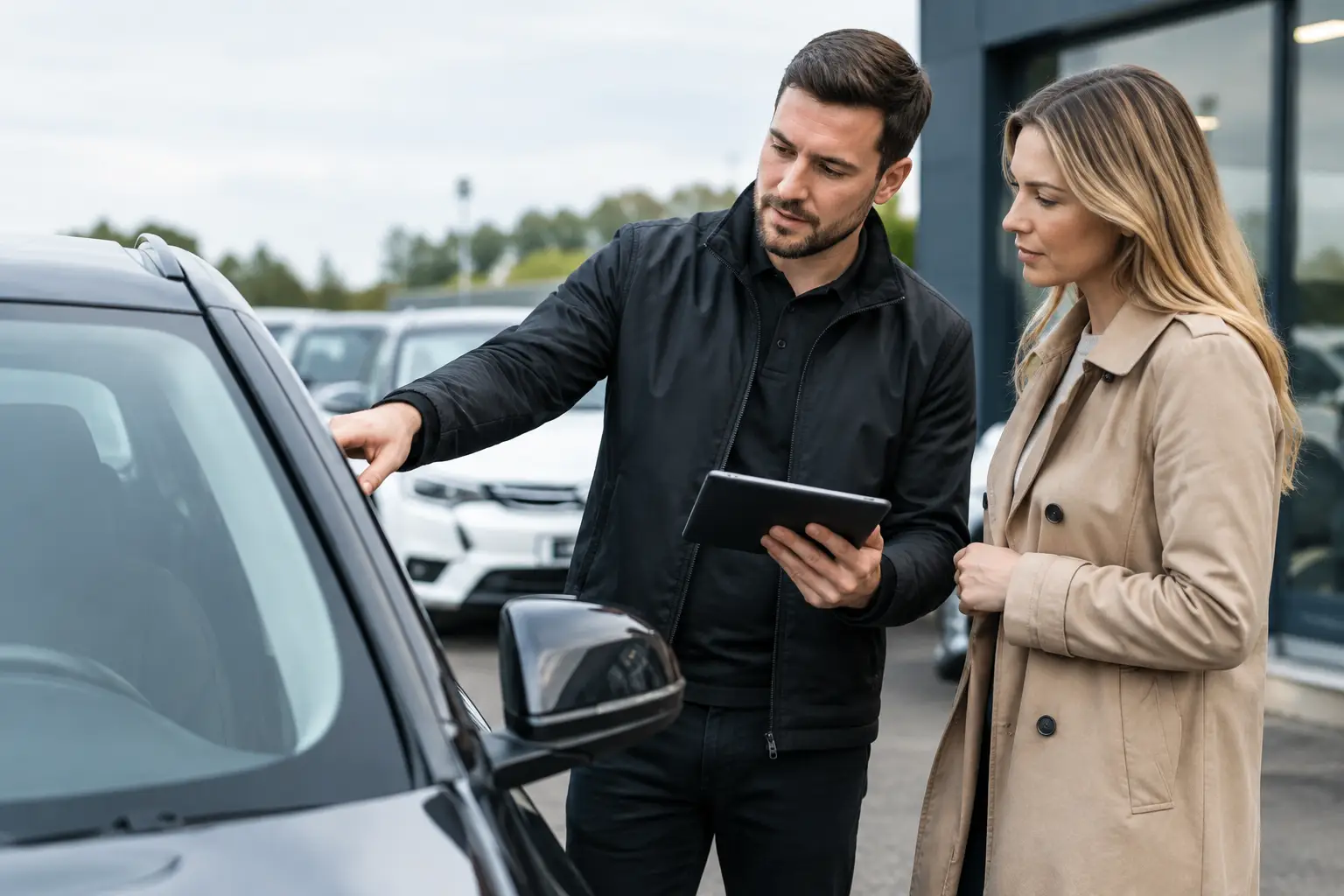
A polished advert, a friendly seller and a sensible-looking price can still lead to a bad purchase. To verify a used car seller, separate two questions before you travel or transfer a deposit: is this person genuine, and do they have the right to sell this particular car? A vehicle history check helps with the car. Careful contact, paperwork and viewing checks help with the seller.
30-second answer
Do not send money because a seller says other buyers are interested, promises to hold the car, or offers to deliver it. Speak to them, check that their details are consistent, view the car where it is normally kept where possible, and make sure the V5C, registration and VIN all match.
Then check the vehicle’s MOT and mileage record, history indicators and asking price before negotiating. A warning is not an accusation, but an unexplained mismatch is a reason to pause. If identity, address, ownership or payment arrangements do not stack up, walk away before money changes hands.
Verify a used car seller, not just the registration
A registration check can reveal useful evidence about a car, but it cannot prove that the person messaging you is honest or entitled to sell it. Equally, a genuine seller can own a car with an issue they do not understand or have failed to mention. Treat seller verification and vehicle due diligence as two parts of the same decision.
Start with the advert. Save screenshots of the description, price, registration, mileage, seller name and contact details. If details later change, you have a record of what was offered. Read the wording closely: phrases such as “selling for a friend”, “no time-wasters”, or “V5 to follow” are not automatic proof of wrongdoing. They do, however, create questions that need clear answers.
Ask why the car is being sold, how long they have had it, where it is kept, and whether there is outstanding finance. A genuine private seller should normally be able to discuss the car’s routine use, recent repairs and faults without pressure or evasiveness. Their answers should fit the vehicle’s age, mileage and paperwork.
Check whether the advert makes sense
Search the registration against the information in the advert. The make, model, fuel type, colour, MOT status and mileage should broadly align. A small mileage difference may simply reflect use since the advert was posted. A large gap, the wrong fuel type, or a description that does not match the vehicle is more serious.
Be alert to copied adverts. Reused photos, an unusually low price and a request for a quick deposit are a risky combination. Reverse-image searching can sometimes reveal an image used in another advert, but it is not a complete test. Your strongest protection is refusing to pay until you have independently checked the car and seller.
Speak to the seller before travelling
A phone call is useful because it is harder to maintain a vague story in conversation than by message. Ask a few practical questions that are not all answered in the advert: when was it last serviced, what work is due soon, how many keys are included, and what advisories appeared at the last MOT?
Listen for consistency rather than rehearsed perfection. A seller may not know every detail, particularly if they have owned the car briefly. That is not automatically a problem. But a person who will not discuss the vehicle, repeatedly avoids direct questions, or insists on a deposit before answering them is asking you to take unnecessary risk.
If you are buying from a trader, ask for the business name, address and invoice details. Check that the person and premises you meet are consistent with those details. A trader presenting themselves as a private seller can affect both the price you pay and the consumer rights you may have. Do not rely on a profile name or a logo in an advert as proof of trading status.
At the viewing: establish who is selling the car
Where practical, view a private-sale car at the seller’s home address in daylight. A seller may have a legitimate reason to meet elsewhere, such as limited parking or work commitments. It depends on the circumstances. But a meeting in a lay-by, supermarket car park or station car park gives you less opportunity to verify the address and should make you more cautious.
Ask to see the V5C log book. Check that the registration, VIN and engine number shown on the document match the car and that the registered keeper’s name and address fit the person selling. The VIN is commonly visible at the base of the windscreen and may also appear on a body plate or stamped area. Do not accept a photograph of a V5C as a substitute for the original document.
The V5C is not proof of legal ownership, and a name on it does not remove the need for other checks. It is one piece of evidence. If the seller says they are selling for a relative, friend or customer, ask why the registered keeper is absent and request a clear explanation. Do not hand over money simply because a story sounds plausible.
Look for signs the car has been recently moved on: no service paperwork, no spare key, a seller who does not know basic controls, or belongings and documents that point to someone else. None of these proves dishonesty. Together, they can justify a more cautious verdict.
Match the paperwork to the vehicle history
Use the free MOT and mileage record to see whether the advertised mileage and condition are credible. Repeated advisories for tyres, brakes, corrosion, suspension or oil leaks tell you what to inspect closely. A clean pass is useful, but it is not a mechanical inspection and it does not guarantee that the car is fault-free today.
For a fuller purchase decision, check finance, theft, write-off, ownership and plate history indicators alongside MOT and mileage patterns. CarSussed turns those checks into a buyer-focused verdict, offer guidance, seller questions and an inspection plan for the specific registration. That matters because raw results can be easy to misread when you are standing beside a car and being asked to decide.
Pay close attention to evidence coverage. A result that has not been returned is not the same as a clear result. CarSussed does not turn an unknown into a green tick. If an important area is unavailable, decide whether you are comfortable proceeding with that uncertainty, asking the seller for further evidence, or leaving the car alone.
Payment is the final seller check
Agree the price only after you have viewed the car, checked its documents and completed your history checks. If you choose to buy, use a payment method with a clear record and make sure the account name is consistent with the seller or their explained arrangement. A request to pay an unrelated third party, use cash only, send cryptocurrency, or make multiple rushed transfers is a strong reason to stop.
Before payment, write down the agreed registration, VIN, mileage, price, known faults, included items and the date of sale. Get a signed receipt with the seller’s name and address. If you are paying a deposit, state in writing what it secures, whether it is refundable and under what conditions. The safest deposit is often no deposit at all until the evidence is satisfactory.
Do not let a long journey or the fear of missing out force the decision. Travelling to see a car costs time and money; buying the wrong one costs far more.
Questions worth asking before you commit
Ask the seller to explain any mismatch rather than trying to fill the gaps yourself. Useful questions include:
- Is the car registered in your name and kept at this address?
- How long have you owned it, and why are you selling now?
- Is there any finance outstanding, or has the car ever been written off or repaired after an accident?
- What faults, warning lights or upcoming work should I know about?
- Can I see the V5C, service records, both keys and photo identification at the viewing?
- Will you provide a signed receipt showing the registration, VIN, mileage and sale price?
A straightforward answer does not guarantee a safe purchase, just as an awkward answer does not prove a scam. The point is to give the seller an opportunity to provide evidence. If they cannot, you have your answer.
The right used car will still be there after sensible checks. Keep your money in your account until the seller, the documents and the vehicle history tell the same story.