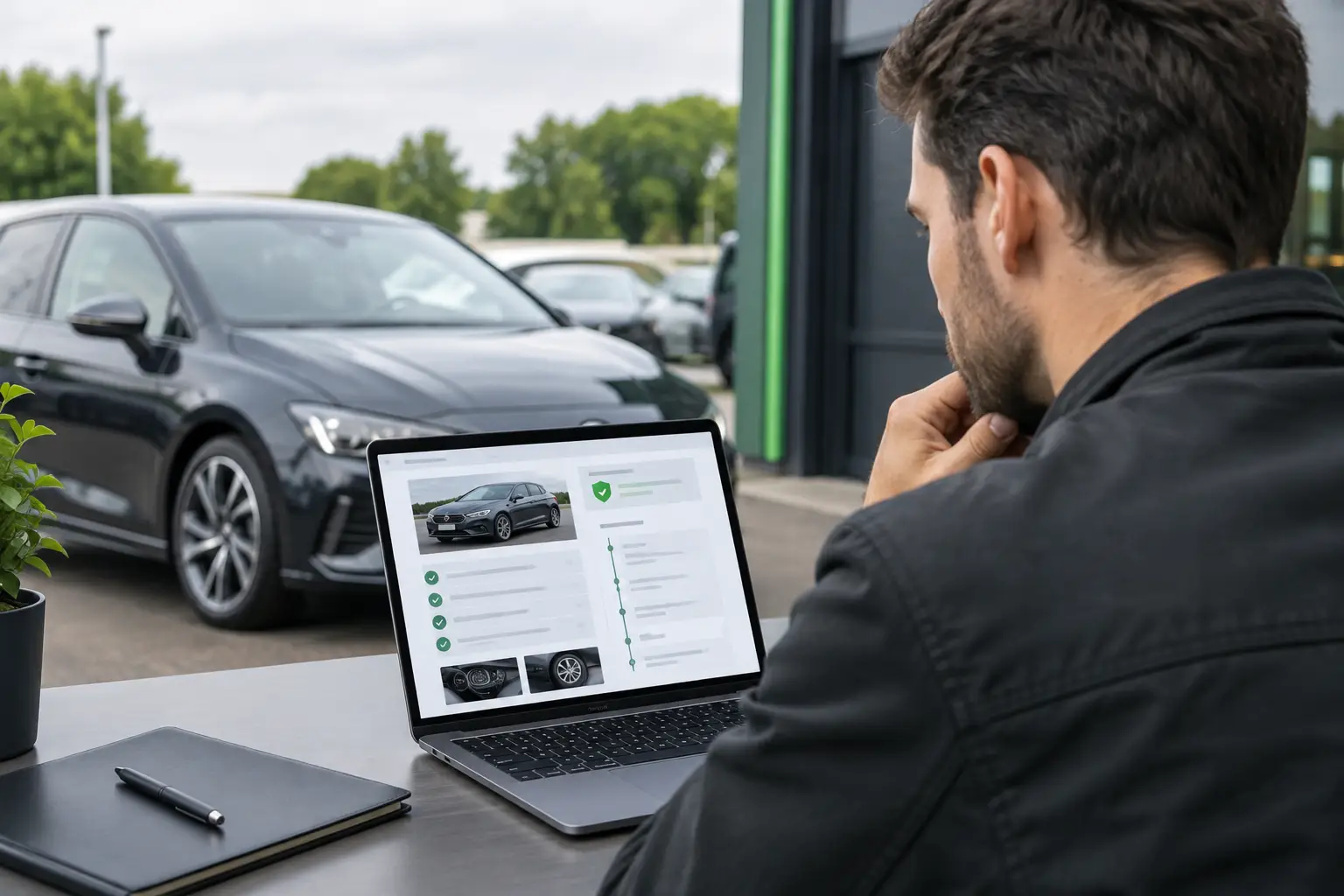
A clean-looking car, a friendly seller and a tempting price can make a used vehicle feel like a safe bet. But a used car history report may reveal questions that are impossible to answer from an advert, a quick walk-around or a test drive. Before you travel far, negotiate or transfer money, check the vehicle behind the registration.
The 30-second answer
A used car history report brings together relevant records and flags that may affect whether you should buy, negotiate harder, proceed with caution or walk away. It can help identify recorded finance, theft, insurance write-off history, mileage inconsistencies, ownership and number-plate information, alongside MOT history.
It is not a guarantee that a car is fault-free, nor is a warning an accusation against the current seller. A record may have an innocent explanation. The value lies in knowing what needs explaining before money changes hands - and in treating information that is not available as unknown, not as a green tick.
The right decision depends on the finding, the price, the seller’s evidence and the vehicle’s present condition. A recorded write-off may be acceptable to one buyer at the right price with strong repair evidence, for example. Outstanding finance or an unresolved theft marker is a very different situation.
What a used car history report should help you check
Finance, theft and write-off records
These are the checks most buyers do not want to discover after payment. A finance indicator can mean a lender retains an interest in the vehicle. If the position is not properly settled and evidenced, a buyer may face a serious ownership problem. Do not rely on a verbal assurance that it has been paid off. Ask the seller to resolve it and provide appropriate confirmation before completing the purchase.
A theft record needs immediate care. It may be incorrect, outdated or capable of being resolved, but it is not something to explain away in a driveway. Pause the purchase until the seller can provide a credible explanation and the relevant status has been dealt with.
An insurance write-off record means the car was previously declared a total loss by an insurer. It does not tell you, on its own, how well the vehicle was repaired or whether it is safe now. It does tell you to ask sharper questions: what was damaged, who repaired it, are there photographs or invoices, and does the asking price properly reflect that history? Consider an independent physical inspection where the history or visible condition gives you cause for concern.
MOT history and recurring defects
MOT data is useful because it shows a pattern over time. One advisory for worn tyres might be routine maintenance. Repeated advisories for corrosion, braking issues, suspension wear or oil leaks deserve more attention, especially if they disappear without a clear explanation or evidence of repair.
Look at the dates and mileages, not just the latest pass. A car that has passed recently can still have had recurring defects, and an MOT is not a full condition report. It records what was assessed on that day. It cannot confirm the state of every mechanical component, how the car drives now or whether a fault will appear next week.
Mileage readings can also help you sense-check the story. A large jump may be normal for a commuter car. A reading that appears to go backwards, or a long period with no supporting history, calls for questions. The dashboard figure, MOT readings, service paperwork and seller’s account should make sense together.
Registration, plate and ownership clues
Number-plate and ownership-related records can add context. A registration change is not automatically suspicious. Many legitimate reasons exist, from cherished plates to personal preferences. But if the car’s identity, plate history, documents and seller’s explanation do not line up, slow down.
The V5C should be checked carefully, but it is not proof of legal ownership or a substitute for history checks. Make sure the registration, vehicle identification number and other vehicle details match the car you are viewing. If the person selling it is not the registered keeper, ask why and be cautious about sending a deposit before the situation is clear.
A flag is a question, not always a verdict
Raw data is only the start. Buyers can make poor decisions in two opposite ways: ignoring a warning because they want the car, or rejecting a vehicle without understanding what the record actually means.
A practical report should distinguish between confirmed information, possible concerns and data that has not been returned. That distinction matters. If a source provides no result, it may mean there is no data available through that source at that time. It does not prove the absence of a problem.
CarSussed is built around this buyer-first approach. Its Full Buyer Report combines available history indicators with MOT and mileage interpretation, valuation context, inspection priorities and an explicit BUY, NEGOTIATE, CAUTION or WALK AWAY verdict. The aim is not to overwhelm you with ticks and labels. It is to give you a sensible next action for that specific car.
Use the report before you negotiate
The best time to run checks is before a long journey, a holding deposit or an awkward conversation about price. If the report shows no major recorded issue but the MOT record points to tyres, brakes or suspension work, you have a more grounded basis for discussing the asking price. If the history raises a question the seller cannot answer, you can save yourself a wasted trip.
Price matters because the same history can lead to different decisions. A low-priced older car with clear, disclosed cosmetic damage and receipts for repairs is not judged in the same way as a premium-priced car advertised as immaculate. Neither a cheap price nor a persuasive advert cancels out a concern. It should change what you require in evidence and what you are prepared to pay.
Avoid presenting a report as a trap or an accusation. Keep the conversation factual: “The history shows this item. Can you explain it and show me the paperwork?” A straightforward seller should understand why you are checking. Evasive answers, pressure to pay quickly or reluctance to let you inspect documents are useful signals in themselves.
Take the findings to the viewing
A report helps you arrive prepared, but it does not inspect the car for you. Use it to focus your viewing and test drive rather than treating it as permission to skip basic checks.
Before committing, make time to do the following:
- Compare the registration and VIN on the car with the V5C and any service records.
- Check that the car’s mileage, condition and service evidence fit the history you have seen.
- Look closely at any areas linked to repeated MOT advisories, such as tyres, brakes, suspension or corrosion.
- Start the engine from cold where possible, test normal controls and take a proper test drive with suitable insurance in place.
- Ask to see invoices for significant repairs, especially after a write-off, major MOT failure or recurring defect.
- Be ready to walk away if the seller’s paperwork, identity or explanation does not add up.
For a higher-value vehicle, a complex history or any concern about repairs, arrange an appropriate independent inspection. A history report can tell you where to look. It cannot assess panel alignment, diagnose an intermittent fault or judge the quality of repair work from a distance.
Know the limits before relying on any result
Vehicle data is valuable, but it has boundaries. Records can be delayed, incomplete or unavailable. Not every repair is recorded, not every fault results in an MOT advisory, and a vehicle can develop a mechanical problem after its latest test. Equally, a warning may relate to an event that has been correctly resolved.
That is why the safest approach combines evidence with observation. Check the history, read the paperwork, question the seller, inspect the car and make sure the price reflects what you know. If a key point cannot be verified, do not fill the gap with optimism.
The car you buy should still make sense after the excitement of the advert has worn off. A few careful checks now can leave you with better questions, a firmer offer and the confidence to leave the wrong car behind.