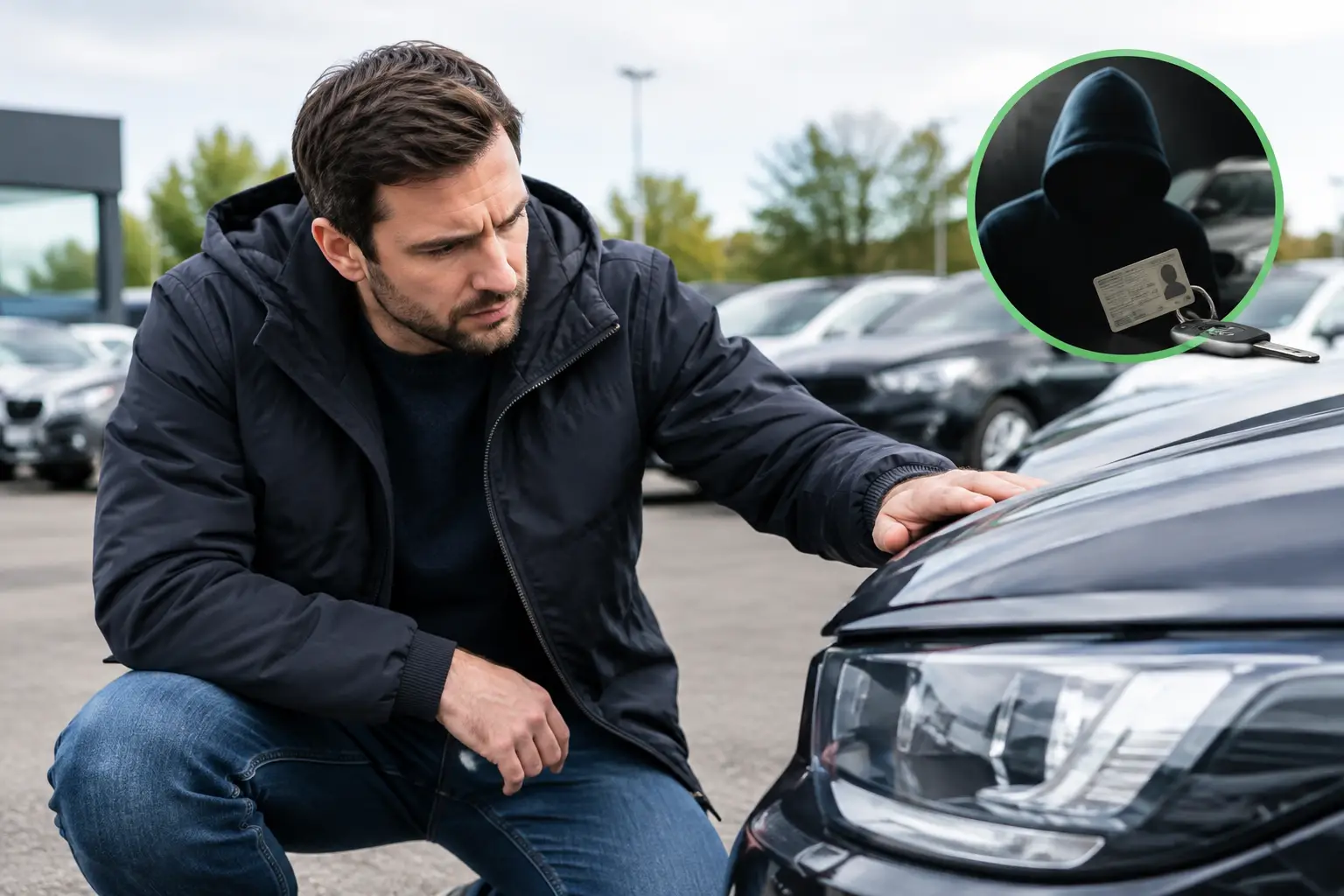
A car can look clean in advert photos, sound convincing over the phone and still carry a problem that becomes yours the moment money changes hands. UK used car fraud trends are not limited to obvious stolen-car scams. They often rely on pressure, selective information and a buyer being asked to decide before they have checked the vehicle properly.
30-second answer
Treat every used-car advert as a claim to verify, not a story to accept. Match the registration, VIN, keeper documents, seller identity and vehicle history before paying a deposit or travelling a long distance. Check the MOT record for patterns, not just the latest pass, and be wary when the asking price is far below comparable cars.
A warning is not an accusation. A private seller may have a perfectly reasonable explanation for a discrepancy. But an explanation should be supported by documents and consistent facts. If it is not, walk away. There will be another car.
Why used-car fraud is harder to spot than it sounds
Most buyers know to avoid handing over cash in a car park. The more common risk is subtler: a vehicle advertised with details that are technically incomplete, misleading or difficult to challenge after payment. An altered mileage reading, an undisclosed insurance write-off or outstanding finance can change what a car is worth and whether it is sensible to buy.
Fraud also overlaps with poor selling practice. A seller may use old photographs, describe themselves as the owner when they are selling for somebody else, or avoid putting key assurances in writing. That does not automatically prove dishonesty. It does mean the buyer needs more evidence before proceeding.
The strongest defence is not one individual check. It is consistency. The advert, registration, documents, history records, condition of the car and seller's answers should tell the same story.
The fraud patterns buyers should recognise
Clocking and mileage inconsistencies
Mileage fraud remains expensive because mileage affects value, expected wear and likely maintenance needs. Modern digital odometers are harder to alter without traces than older mechanical units, but a dashboard figure alone is not proof of a car's true distance travelled.
Compare the advertised mileage with dated MOT readings and service invoices. Look for a reading that falls between tests, a large unexplained jump, or a car whose cabin, pedals, steering wheel and driver's seat appear unusually worn for its recorded miles. None of these points is conclusive by itself. Together, they justify asking direct questions and pausing the purchase.
Do not assume a short gap in MOT history is harmless either. A vehicle may have been off the road, but the seller should be able to explain why. Missing evidence is unknown, not a green tick.
Cloned registration plates
A cloned car uses the registration of a similar legitimate vehicle to disguise its identity. The number plates may match the advert and a basic registration search, while the physical vehicle does not match the records attached to that registration.
Check the VIN on the car against its V5C and any available service paperwork. The VIN should be legible, untampered with and consistent wherever it appears. Check that the make, model, colour, engine and key dates match the vehicle in front of you. If details differ, do not rely on a promise that paperwork will be corrected later.
Be especially cautious if the seller discourages inspection, wants to meet away from the address shown on documents, or insists on payment before you can see the car properly.
Outstanding finance and ownership claims
A seller can possess a vehicle without having clear title to sell it. Where finance remains outstanding, the finance company may retain an interest in the car. The buyer could face a stressful dispute even if they acted in good faith.
Ask whether the car has any finance, lease or hire-purchase arrangement and note the answer. Then use a history report that checks available connected-source indicators. A clear result is useful evidence, but data coverage matters: a report can only report on information returned by its sources at that time. It cannot turn unavailable information into certainty.
If a seller says finance has recently been settled, ask for evidence and allow time for records to update. Rushing because they promise to resolve it after you pay is not a sensible trade-off.
Write-off concealment and misleading descriptions
Some repaired insurance write-offs can be lawful to sell, provided they are accurately represented and safe to use. The issue is not that every recorded write-off is automatically a bad car. It is whether the repair quality, price and disclosure make sense for you.
A seller who calls a vehicle “immaculate” while omitting a material history point is asking you to make a decision with incomplete information. Compare panel gaps, paint colour and finish across adjacent panels, tyre wear, warning lights and the quality of repair underneath where visible. An independent mechanical inspection may be worthwhile where the history, price or condition raises questions.
A write-off record should usually affect what you offer, how carefully you inspect the car and whether you are comfortable with future resale. It may also affect insurance options, so check that before committing.
Deposit scams and impersonated adverts
Fraudsters know that a desirable car at a tempting price creates urgency. They may claim several buyers are waiting, say they are abroad, or request a holding deposit before allowing a viewing. In some cases, the car or advert photographs belong to someone else entirely.
Do not send money simply to secure a viewing. Verify that the seller has the vehicle, meet it at a credible location and inspect the documents and car before transferring funds. Be cautious of payment details that do not match the seller's identity. A deposit may be reasonable in a genuine sale, but only after you understand exactly what it reserves, whether it is refundable and who you are paying.
Use the MOT record as a pattern check
An MOT pass is not a guarantee of condition, and a history of advisories does not make a car unsellable. What matters is the pattern over time. Repeated tyre, brake, suspension, corrosion or emissions advisories can reveal deferred maintenance or the cost that may be waiting just after purchase.
Look at the wording, recurrence and timing. Have the same issues appeared for several years? Were advisories followed by repairs, or simply repeated? Is the car being sold shortly after a string of warnings? These questions turn a raw MOT history into a buying decision.
At the viewing, inspect the areas connected to recurring advisories. If brake wear is a repeated theme, ask for invoices and budget for a proper inspection. If corrosion has been recorded, do not accept “it passed last time” as an answer to whether the condition is acceptable now.
A practical check before you travel
Before arranging a viewing, ask the seller for the registration, current mileage, VIN and a clear answer on finance, write-off history and how long they have owned the car. A genuine seller may not know every technical detail, but they should not object to reasonable checks.
Then compare the advert against the official MOT and mileage record. Check whether the vehicle's specification, colour and age make sense, and assess the asking price against similar cars. A low price can reflect a quick sale, but it can also be the hook that stops buyers asking questions.
For a vehicle you are seriously considering, a Full CarSussed Buyer Report costs £9.99 as a one-off purchase. It brings available history indicators together with MOT and mileage interpretation, valuation context, seller questions and a practical BUY, NEGOTIATE, CAUTION or WALK AWAY verdict. It is decision support, not a physical inspection, so the viewing and test drive still matter.
At the viewing: verify, then negotiate
See the car in daylight if possible and avoid viewing alone when you feel uncertain. Start it from cold, check dashboard warning lights behave normally, test major functions and take a proper test drive if insured to do so. A seller who will not permit reasonable checks is giving you useful information.
Match the VIN, registration and V5C details carefully. Check the seller's name and address against the document where appropriate, but remember that a V5C is not proof of ownership. Ask why the car is being sold, what work has been done recently and what faults they know about. Listen for answers that change when you ask the same point in a different way.
Use evidence to negotiate rather than making vague accusations. For example: “The MOT history shows repeated rear tyre advisories and the tyres are near their limit. I need to allow for replacement, so my offer is lower.” If the seller cannot provide reassurance or the price no longer reflects the risk, leave.
The moment to walk away
Walk away when identity details do not match, the history and seller's story conflict, payment pressure replaces evidence, or the car cannot be inspected properly. Also walk away if you feel rushed, uneasy or unable to explain the risk in plain English. A cheap car with unanswered questions is not necessarily a bargain.
Before you transfer money, make sure you know exactly which car you are buying, who is selling it and what evidence supports the price. Taking an extra evening to check can be far cheaper than spending months trying to fix a mistake that was avoidable before money changed hands.