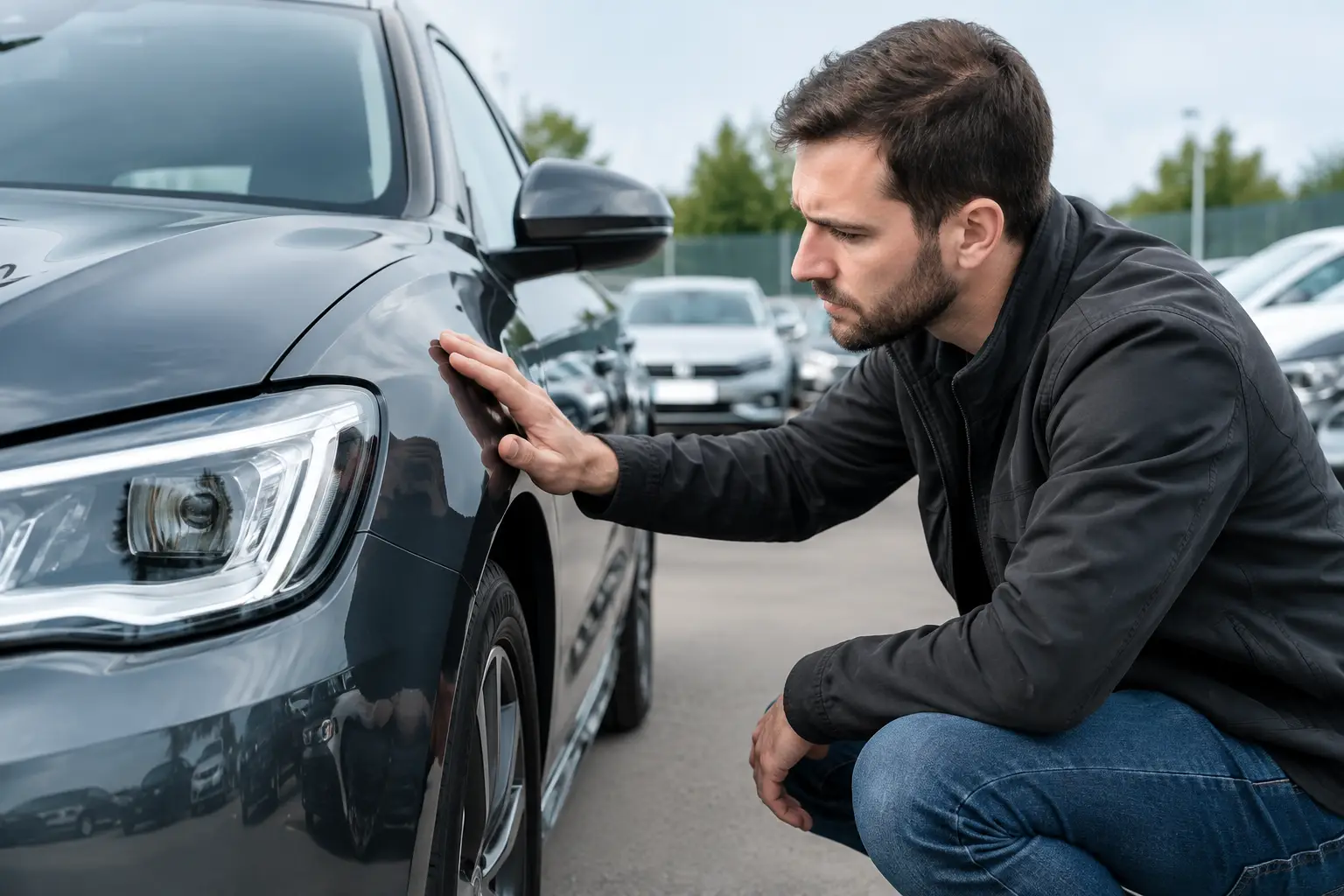
A cheap, tidy-looking car can become a very expensive problem if it is wearing another vehicle’s identity. The top signs of cloned cars are often small inconsistencies between the registration, the vehicle in front of you and the paperwork. Spotting them before money changes hands could save you from losing the car, your payment, or both.
30-second answer
A cloned car is usually a stolen vehicle that has been given the registration number and identity of a similar legitimate vehicle. The number plates may belong to a genuine car of the same make, model and colour, which can make a basic advert look convincing.
Pause the purchase if the registration check does not match the car precisely, the VIN has been altered or cannot be verified, the seller will not meet at their home address, or the deal is priced to make you rush. Do not send a deposit to “hold” a car while questions remain. A warning is not an accusation, but it is a reason to verify before paying.
What does a cloned car look like?
Cloning is designed to fool people at a glance. A criminal may copy the registration from a legitimately registered vehicle and fit matching plates to a stolen one. The vehicle might then be advertised privately, sold with convincing-looking documents, or used on the road while penalties and notices go to the innocent keeper of the genuine car.
That means a registration alone is not enough. A vehicle-history check can identify discrepancies and known risk markers, but you must also compare the physical car with its records. Some information may be unavailable from connected sources at the time of a check. CarSussed does not turn an unknown into a green tick, and neither should you.
Top signs of cloned cars to check before viewing
The registration details do not match the vehicle
Start with the obvious: does the registration return the same make, model, fuel type, colour, engine size and first-registration year as the vehicle advertised? Small differences matter. A listing for a blue diesel hatchback should not return a black petrol version, even if the model name looks broadly similar.
Be careful with changes that can have legitimate explanations. A car may have been professionally wrapped, repainted or fitted with private plates. But a seller should be able to explain this clearly and provide evidence where appropriate. A vague answer such as “that’s how I bought it” is not proof.
Check the registration plates themselves too. Plates that are poorly made, wrongly spaced, unusually fresh compared with the car, or fixed in a way that looks temporary deserve a closer look. They are not proof of cloning on their own, but they add context.
The VIN is missing, damaged or does not match
The Vehicle Identification Number, usually called the VIN or chassis number, is one of the strongest identity checks available to a buyer. It should match the VIN shown on the V5C registration certificate and any records that display it.
Find the VIN in the places specified for that model. It may be visible through the windscreen, on a body sticker, stamped into the structure, or shown in more than one location. Compare every character carefully. A single altered digit can matter.
Walk away if the VIN plate looks tampered with, rivets look disturbed, stamping is uneven, or the number has been scratched out, covered or freshly painted around. Do not accept a story that the VIN is “somewhere under the carpet” if the normal visible identifiers cannot be checked. A legitimate seller should understand why you are asking.
The V5C raises questions rather than answers them
A V5C is useful, but it is not proof of ownership and it does not prove a vehicle is not stolen. Treat it as one piece of evidence.
Check that the registration, VIN, make, model and colour are consistent with the car. Look for alterations, poor print quality, spelling mistakes or details that do not align with the vehicle. Ask to see the seller’s photo ID and compare their name and address with the keeper details where reasonable. If they are selling for someone else, find out exactly why and speak to the registered keeper if possible.
A recently issued V5C can be legitimate, particularly after an address change or replacement. It can also remove useful history from your view. That does not make the car cloned, but it should make you more methodical.
The seller makes verification difficult
Fraud relies on speed, distance and pressure. A seller who insists on meeting in a car park, outside a station or at a different address may be trying to avoid being traced. There are innocent reasons for a neutral meeting point, but a private seller should be able to give a credible explanation and allow you time to inspect the vehicle properly.
Be particularly cautious if the seller says they are abroad, selling for a relative, unable to show documents, or only available for a quick handover. Refusal to let you check the VIN, inspect the V5C, or arrange an independent inspection is a clear reason to stop.
Never let a low asking price override the basics. “Need gone today” is not a substitute for evidence.
The history has gaps or conflicts
MOT history and recorded mileages can reveal whether the car’s story makes sense. Check that the mileage shown in the advert, on the dashboard and in official MOT records follows a believable progression. Repeated MOT advisories for tyres, suspension, corrosion or brakes are not cloning evidence, but they tell you what the car may need next.
For identity risk, pay closer attention to a history that does not fit the vehicle. A car claimed to have been off the road for years but with no explanation for its condition, or a vehicle whose recorded colour and fuel type conflict with what you are viewing, needs resolving before purchase.
A history check may also return theft, write-off, finance, ownership or number-plate indicators depending on data availability. Each result needs interpretation. A clear result for one source does not make every other unknown safe.
Questions to ask the seller
Keep your questions calm and specific. Ask how long they have owned the car, why they are selling, where it was bought, whether the registration has ever changed, and whether there have been any colour changes or repairs. Then ask to see the service paperwork and compare dates, mileages and registration details.
Pay attention to how the answers fit together. A genuine private seller will not necessarily have every receipt, particularly on an older car. But they should be able to give a consistent account of the vehicle they have been using. Evasive answers, changing details or pressure to pay before you have checked are more useful signals than polished sales talk.
If you suspect a car is cloned
Do not accuse the seller at the viewing. Leave safely, take no risks and do not hand over cash or transfer funds. If you have travelled with someone, leave together. Keep the advert, messages, registration, seller contact details and any photos you have taken lawfully.
If the car is on a dealer’s premises, ask them to pause the sale while the discrepancy is investigated. If it is a private sale and the VIN or registration appears suspicious, report your concerns to the police using the appropriate non-emergency route. If you believe a crime is happening or you are at immediate risk, call 999.
If you have already paid, act quickly. Contact your bank or payment provider and report the matter to the police. Do not keep driving a vehicle you believe may be stolen or incorrectly identified. The right next step depends on the facts, but delay rarely helps.
Make the decision before the journey
A sensible buying process starts before you set off. Check the registration against official MOT and mileage information, compare it with the advert, and use a fuller buyer report to assess known history indicators alongside the asking price and likely inspection priorities. CarSussed is designed to turn that evidence into a practical verdict and the questions worth asking, rather than leaving you to interpret disconnected results alone.
Then view the car in daylight, at an address you can verify, with enough time to inspect it without pressure. Check its identity before discussing payment. If the evidence does not line up, there will always be another car. Your money is safest in your account until the vehicle has earned your confidence.