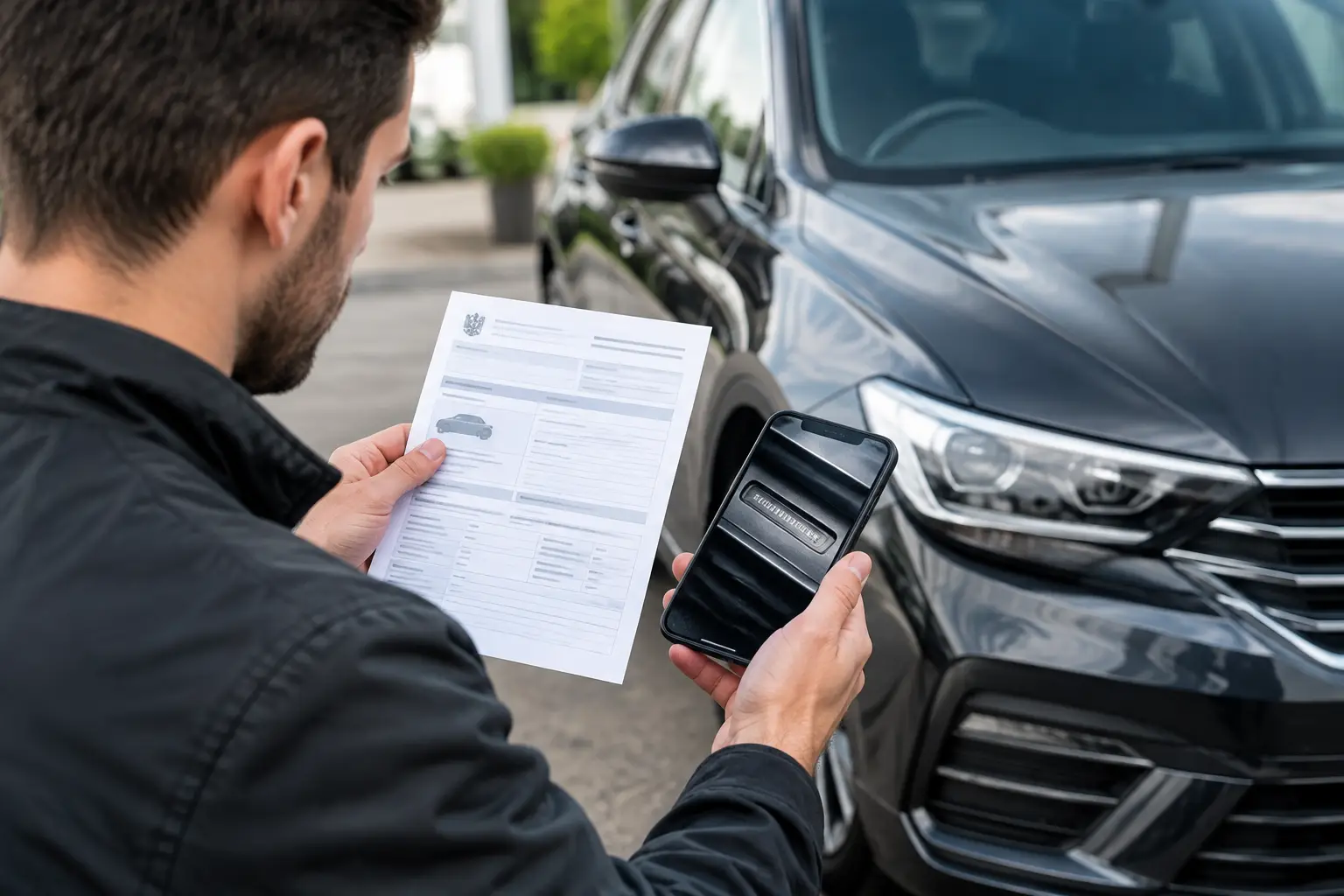
A VIN mismatch can turn a promising used car into a problem before you have even left the seller’s driveway. Knowing how to match VIN documents gives you a simple but powerful check: does the car in front of you genuinely match the identity shown on its paperwork?
30-second answer
Find the vehicle identification number on the car, then compare every character against the V5C log book and any supporting documents supplied by the seller. Check the registration, make, model, colour and engine details too. Do this in person, before a deposit or bank transfer.
A small discrepancy may be a clerical error. It may also point to cloned identity, altered paperwork, stolen parts or a vehicle that is not what it appears to be. A warning is not an accusation, but it is a reason to stop, ask questions and verify before paying.
What a VIN is and where to find it
The VIN, also called the chassis number, is the vehicle’s unique identity code. Most modern cars use a 17-character VIN made up of letters and numbers. It can identify the manufacturer, vehicle type and individual production number.
On UK cars, you will commonly find it in one or more of these places: at the base of the windscreen on the driver’s side, on a plate or sticker in the driver’s door shut, under the bonnet, or stamped into the bodywork. The exact location varies by manufacturer and age of vehicle. Check the owner’s handbook if the seller has it, but do not rely on a photograph they sent before the viewing.
Older vehicles may have a shorter or differently formatted chassis number. That does not automatically mean there is a problem. It does mean you should be more careful about matching the number exactly and understanding what is normal for that particular vehicle.
How to match VIN documents at the viewing
Start with the VIN physically attached to the vehicle. Do not begin with the V5C and assume the car must match it. The car is what you are buying; the documents must support its identity.
Compare the VIN character by character with the number on the V5C registration certificate. Take your time. Characters such as O and 0, I and 1, and S and 5 are easy to confuse, particularly on older paperwork or worn plates. Read it aloud with the seller present, or write it down carefully and compare it twice.
Then compare it with other records the seller can reasonably provide, such as service invoices, previous MOT paperwork, a purchase invoice or a manufacturer service record. One old invoice containing a typo is less concerning than several documents that disagree with the car and with each other. Look for a consistent identity trail, not one conveniently matching piece of paper.
The V5C should also broadly match the vehicle’s registration mark, make, model, body type, fuel type, colour, engine size and date of first registration. Minor differences can have innocent explanations. For example, a colour change may have been notified, an imported specification can be described differently, or a model designation may be shortened. But the seller should be able to explain any difference clearly and provide evidence where appropriate.
Remember that a V5C is not proof of legal ownership. It is the registration document. Still, a V5C that does not match the vehicle is a serious issue and should not be brushed aside.
Check the VIN itself, not just the characters
A correct-looking number can still deserve scrutiny. Look at the plate, sticker or stamped area around it. It should appear securely fitted, cleanly printed or consistently stamped, with no obvious signs of tampering.
Be alert to scratched metal around a stamped VIN, uneven rivets, fresh paint in one isolated area, misaligned labels, signs of a plate being removed and refitted, or digits that look unlike the rest. Wear and age are normal on an older car. What matters is whether the VIN area looks disturbed compared with the surrounding vehicle.
Do not try to remove trim, scrape paint or dismantle anything yourself. Ask the seller to show you all accessible VIN locations. If they refuse, rush you or say it is unnecessary, treat that as useful information. A genuine seller should understand why a buyer wants to verify the identity before money changes hands.
When a mismatch might be explainable
Not every discrepancy means the vehicle is stolen or cloned. A document may contain a transcription error, particularly if an invoice was produced manually. A number plate may have changed during the car’s life. A private plate may have been retained, and the vehicle may have returned to an earlier registration.
The key question is whether the explanation is evidenced and proportionate to the discrepancy. If the V5C VIN differs by one character from the VIN on the car, do not accept “it has always been like that” as an answer. Ask the seller to resolve it with the relevant authority before you buy.
If the registration has changed, ask to see paperwork that connects the current registration to the vehicle. If the car has been rebuilt, restored or modified, the identity issue may be more complex. In that situation, specialist advice may be sensible before committing to the purchase.
A seller who is open, organised and willing to pause the sale while evidence is checked is very different from one insisting that you transfer money immediately.
Match the documents to the history, too
VIN matching is one part of due diligence, not the whole job. A car can have matching paperwork and still carry finance, theft, write-off, mileage or maintenance concerns.
Use the registration to check the official MOT history and recorded mileages. Compare those readings with the odometer, service invoices and the seller’s description. A 72,000-mile car with service paperwork showing 104,000 miles two years earlier needs an explanation, even if the VIN matches perfectly.
Read the MOT record for recurring faults. Repeated tyre, brake, suspension, corrosion or emissions advisories can tell you where to inspect more closely. An advisory is not a verdict, but patterns matter. A car that repeatedly returns with the same defect may need money spent soon after purchase.
A full vehicle-history check can add connected-source indicators for outstanding finance, theft, insurance write-offs, plate records and ownership-related signals. It should also be clear about coverage. CarSussed does not turn an unknown into a green tick: if information has not been returned or cannot be confirmed, treat it as unknown and decide whether you are comfortable proceeding.
Questions to ask when the VIN or paperwork does not line up
Keep your questions factual. You are checking evidence, not accusing the seller of wrongdoing. Ask when they bought the car, who they bought it from, why a detail differs, and whether they have paperwork to support the explanation.
If the V5C is missing, ask why and wait for a replacement in the seller’s name rather than relying on promises. If the seller says they are selling for a relative or friend, establish who the registered keeper is and why the named keeper is not present. If they claim a document was lost, ask for replacement evidence before handing over funds.
Be particularly cautious if the seller wants payment to an unrelated bank account, pressures you to leave a deposit, will only meet away from their home or business address, or refuses to let you inspect the documents and VIN together. These behaviours do not prove dishonesty, but they increase the risk of an expensive mistake.
When to walk away
Walk away if the VIN on the car does not match the V5C, if it appears altered, or if the seller cannot provide a credible, verifiable explanation. Walk away if the vehicle’s registration, paperwork and history do not form a coherent story. There will be another car.
The same applies when you are asked to pay before you have seen the car, its VIN and its documents together. A deposit can feel like a small commitment, but it can make it harder to leave when new concerns emerge.
If you still want the car after an explained discrepancy, do not rush. Ask for the issue to be corrected or independently verified first, then revisit the purchase once the evidence is consistent.
A used car should not require blind trust. Match the VIN, test the paperwork against the vehicle and let unanswered questions slow the deal down. The right seller will understand why.