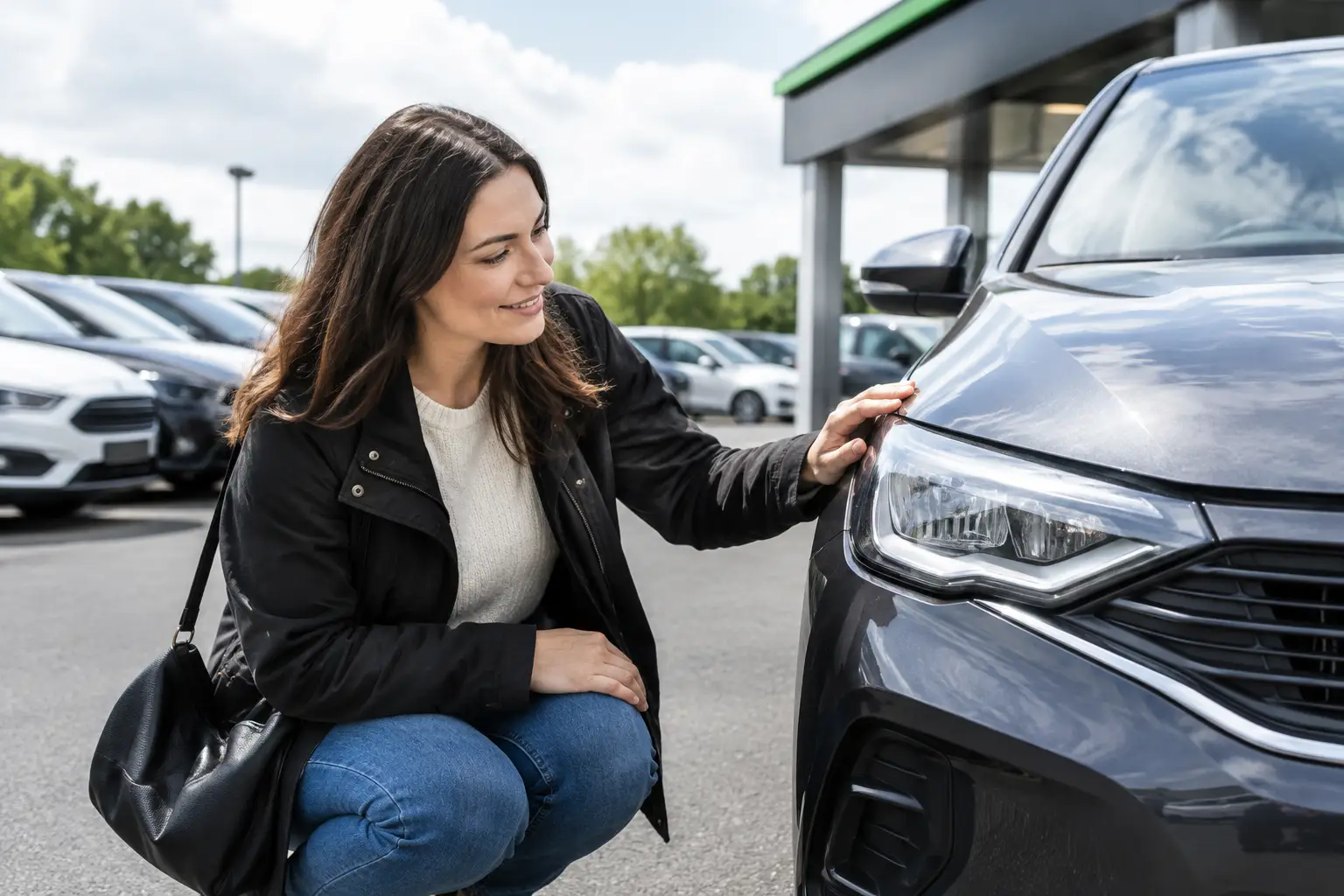
A cheap-looking used car can become expensive before its first service is due. For a first-time buyer, the biggest risk is not choosing the wrong colour or missing an optional extra. It is paying for a vehicle with hidden history, neglected faults or a price that does not reflect its condition. This first time car buyer guide gives you a practical order of checks, so you can make a decision before money changes hands.
The 30-second answer
Set a total budget, not just a purchase price. Check the registration before travelling or leaving a deposit. Compare the asking price with the car’s age, mileage, condition and history. View it in daylight, inspect it cold, test drive it properly and ask direct questions. If the seller avoids reasonable checks, the paperwork does not stack up, or the evidence raises a serious concern, walk away.
A warning is not an accusation. A recorded write-off, a patchy MOT record or an unexpected ownership detail may have an explanation. Your job is to hear that explanation, check whether the evidence supports it and decide whether the price reflects the risk.
Start with a budget that leaves room for reality
The advertised price is only the opening number. You also need to cover insurance, vehicle tax, fuel, servicing, tyres, repairs and, depending on the car, a timing-belt or timing-chain check. If you are buying a lower-priced car, setting aside a repair fund is especially sensible. An older vehicle can be good value, but it will not become maintenance-free because it is inexpensive.
Before you shortlist cars, obtain insurance quotes using the exact registration where possible. Two similar-looking hatchbacks can produce very different premiums for a new driver or a first policyholder. Check the tax band too. These costs are not reasons to reject a car automatically, but they should be part of the calculation before you negotiate.
Avoid stretching every pound on the purchase itself. A car that leaves no money for an immediate service, a tyre or an unexpected MOT repair can quickly stop being a bargain.
Check the advert before you travel
Read the wording closely. Does the seller say they are the registered keeper, or are they selling it for a friend, relative or customer? A genuine reason may exist, but it increases the questions you need answered. Be cautious if an advert pressures you to pay a holding deposit quickly, gives vague details, or uses photographs that do not clearly show the registration and condition.
Ask for the registration, current mileage, MOT expiry date, service-history details and the vehicle identification number if the seller is willing to provide it. A legitimate seller should expect sensible questions from a buyer. If they will not share the registration before you travel, consider why.
Use the free MOT and mileage information available for the vehicle to look beyond the current MOT pass. Repeated advisories for tyres, brakes, suspension, corrosion or oil leaks can show where money may be due next. Look for mileage that rises logically over time. A single anomaly deserves an explanation, especially if it conflicts with the dashboard reading or service records.
Run a history check, then interpret it
A registration check should not be treated as a simple green light. It is evidence with limits. It can reveal significant issues such as outstanding finance, theft records, insurance write-off information, plate changes and mileage concerns, depending on information returned from connected sources. It cannot tell you whether the clutch is worn, whether a warning light has been cleared temporarily or whether the car drives well.
This is where interpretation matters. A buyer report should help you distinguish between a confirmed issue, a question to put to the seller and information that has not been returned. CarSussed, for example, combines history indicators with MOT and mileage interpretation, valuation context, viewing priorities and a clear buyer verdict for £9.99, with no subscription. It does not turn an unknown into a green tick.
Treat certain findings as stop-and-check points rather than automatic assumptions:
- Outstanding finance needs resolving before you pay. Do not rely on a verbal promise that it will be settled later.
- A theft marker or identity concern needs careful verification and may be reason enough to walk away.
- A write-off history is not automatically unsafe, but you need to know the category, repair quality, insurance implications and whether the lower value is reflected in the price.
- Mileage inconsistencies should be explained with documents, not guesswork.
The right decision depends on the car, the evidence and the discount. A well-repaired, properly documented vehicle may suit a buyer with a realistic price and an independent inspection. A car with missing answers, however, is a different proposition.
Compare the price with the actual car
Do not negotiate from the seller’s asking price alone. Find comparable cars with similar age, mileage, specification and condition. Then adjust your view for its MOT history, service evidence, number of keys, tyre condition and faults found at viewing. A fresh MOT is useful, but it is not a service record and it does not guarantee that no repair is approaching.
If the car needs two tyres, has an advisory for brake wear and lacks proof of a major scheduled service, those are costs or uncertainties you can price into an offer. Be specific. “I have allowed for tyres and the upcoming service” is more credible than making a low offer without a reason.
Equally, do not assume every seller will reduce the price. A well-presented car with strong records and sensible pricing may not have much room. Your power is the ability to leave it, not the ability to argue.
View the car with a cold, clear routine
Arrange to see the vehicle in daylight and at the seller’s address where possible. Take someone with you if you feel unsure. Do not view in heavy rain or poor light if you can avoid it, as both can hide paintwork and tyre-condition issues.
Before starting the engine, compare the registration, VIN and keeper details with the paperwork. The VIN should match exactly wherever it is shown. Look around the car slowly: uneven panel gaps, mismatched paint, overspray, corrosion, damaged tyres and warning lights all deserve attention. Check that the tyres have legal tread, are not cracked and match across each axle where appropriate.
Ask the seller not to warm the engine before you arrive. A cold start can reveal smoke, rattles, hesitant starting or warning lights that a warmed-up engine may disguise. Listen without the radio on. Test electrics, air conditioning, windows, lights, central locking and infotainment. Small faults are still faults, and they can be costly on more complex cars.
On the test drive
Make sure you are insured to drive it, or ask the seller to drive while you observe. The car should pull cleanly, brake in a straight line and steer without vibration or excessive noise. Test the clutch bite, gear changes, parking manoeuvres and, where safe, acceleration at road speed. Pay attention to temperature gauges and warning lights.
Do not let a polished exterior rush your judgement. A short, careful drive tells you more than ten minutes of sales talk.
Ask questions that create a paper trail
Ask when it was last serviced, what work has been completed recently, whether there are known faults and why it is being sold. Request invoices, not just a stamped book. Ask about both keys, wheel-locking-nut tools, manuals and any spare wheels or repair kits.
If the car has an advisory pattern, ask what was done after each one. If history shows a plate change or write-off, ask for the explanation and supporting paperwork. Write down the answers or keep messages. If the seller’s story changes, pause the purchase.
Never feel pressured to transfer money because another buyer is supposedly waiting. A genuine car at a fair price will still need to withstand basic checks. Pay only when you are satisfied with the vehicle, the seller’s right to sell it and the agreed terms. Keep a written receipt that records the registration, VIN, price, date, mileage and both parties’ details.
Know when to walk away
Walk away if the VIN or registration details do not match, the seller will not allow reasonable checks, the car appears misdescribed, or significant concerns cannot be supported by evidence. Also leave if you feel unsafe, rushed or uncomfortable handing over money. There will be another car.
For a first purchase, choosing a slightly less exciting car with clear history, honest condition and manageable running costs is often the smarter move. The best used car is not the one that wins the advert. It is the one you can verify, afford and drive away with confidence.